NOIR Rain, Neon, and No Good Choices: What Noir Is Really Saying
Noir is not a genre. It is a temperature.
You feel it in the first paragraph of a Raymond Chandler novel before anything has actually happened — in the quality of the light, in the particular exhaustion Philip Marlowe carries through the description of a room, in the understanding that arrives before the plot does, with the quiet certainty of bad news: whatever happens in this story, it will not resolve cleanly. The world of noir is not a world where virtue is rewarded and order restored. The world of noir is a world where the order that exists is corrupt, where the rewards go to people who have not earned them, and where the only thing a person with any remaining integrity can do is maintain a certain posture in the face of evidence that integrity is not going to be enough.
That is a precise moral position. It is also, for a significant number of readers across almost a century of the form, one of the most honest things fiction has produced.
Where Noir Came From and Why It Matters
The American noir tradition developed in the pulp magazines of the 1920s and 1930s — Dashiell Hammett in Black Mask, Chandler following a decade later, both of them working in a form that was commercially marginal and aesthetically underestimated. They were writing about cities — specifically American cities in a specific historical moment — that the mainstream literary establishment had not quite learned to see. The cities of the Depression and the post-Prohibition period, where the official line about American opportunity and American justice had been definitively contradicted by events, and where a significant portion of the population had received a practical education in how power actually distributed its favours.
Hammett and Chandler did not invent moral ambiguity. But they gave it a form and a vernacular that have proven almost indestructibly useful. The hard-boiled detective — operating outside institutional authority, too honest for the police and too poor for the lawyers, holding to a personal code in an environment that has no respect for personal codes — is a character built from the specific conditions of his moment. And yet he keeps appearing, in different iterations, in different cities, in different decades, because the conditions that produced him have never fully resolved.
The gap between official values and actual practice. Between the story a society tells about itself and how it actually distributes harm. Between the people with institutional power and the people who live under institutional power's consequences without benefiting from its protections. These are not historical conditions. They are recurring ones. Which is why noir keeps returning.
What the Genre Got Wrong and Why It Still Matters
No discussion of noir can honestly avoid the femme fatale, and no honest discussion of the femme fatale can avoid the problems she presents.
The classic femme fatale is a male projection. She exists in the narrative as a threat to the male protagonist — specifically to his moral integrity and his physical safety — and her sexuality is inseparable from her dangerousness. She is beautiful and she is lethal and the connection between those two things is presented as natural rather than as a specific cultural anxiety about female agency and desire. She is not a character in the full sense. She is a force — one that the hero must resist or be destroyed by.
This is a significant limitation, and it is one that the contemporary noir tradition has increasingly acknowledged and attempted to work past. The female noir protagonist — Megan Abbott's suburban mothers, Gillian Flynn's Amy Dunne, Laura Lippman's women operating in the grey zones of domestic life and professional ambition — reclaims the femme fatale's position in the narrative by giving her interiority. She is no longer the threat observed from outside. She is the consciousness the reader inhabits. And from that interior position, her choices become comprehensible in ways that the classic form never allowed.
This shift does not resolve the problems of the classic femme fatale. It bypasses them by refusing the external observer position. The woman is not viewed through the male protagonist's desire and fear. She views herself, and the world, from the inside. That is a fundamentally different story, and it has produced some of the most interesting noir fiction of the past two decades.
The City: Corruption as Architecture
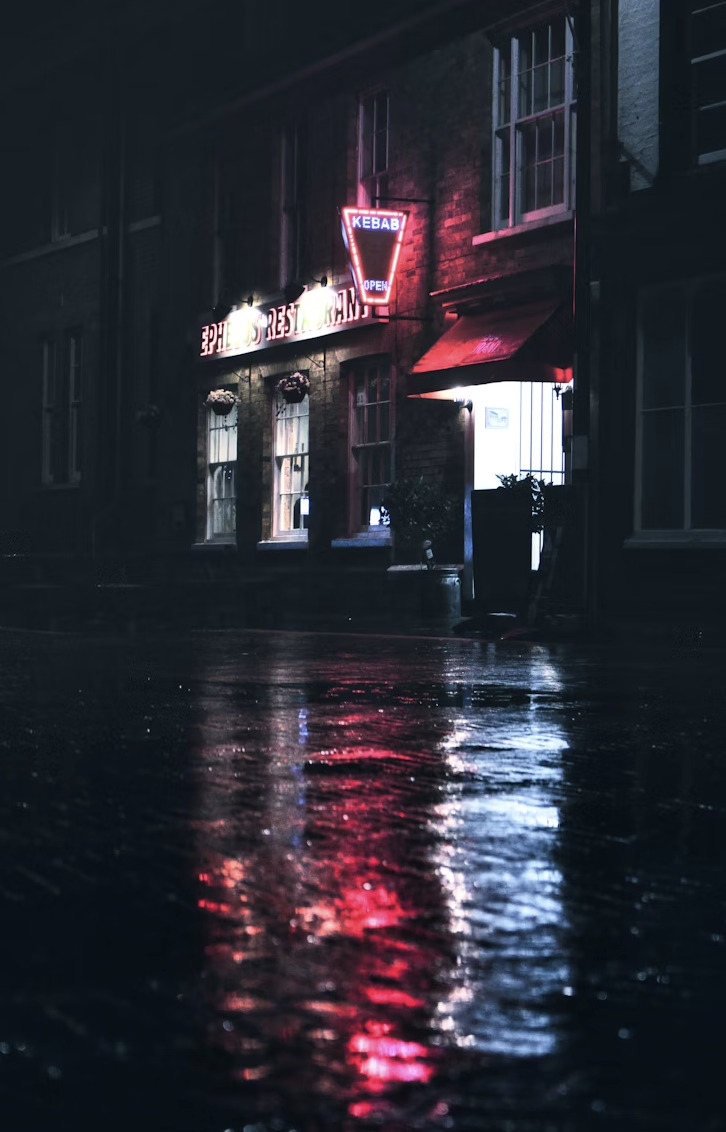
Noir's relationship with the city is not incidental. The urban environment is not simply a backdrop against which the moral drama plays out. It is the drama's primary condition. The city in noir is physically organised to produce the outcomes it produces. Its geography reflects its power structures. The right neighbourhoods and the wrong ones, the districts where certain things happen and the districts that officially know nothing about them — the city's spatial organisation is a map of who matters and who does not.
The private detective moves through all of this. That is, in fact, the point of the private detective as a figure — they are not institutionally anchored to any part of the city's geography. They can move from the wealthy client's house to the waterfront bar to the corrupt official's office to the crime scene in the neighbourhood the newspapers do not routinely cover. This mobility is their function and their vulnerability. They see the whole city because they belong fully to none of it.
What the city shows them, and through them the reader, is how the system actually works. Not in theory. In practice. Who gets investigated and who does not. Who receives the protection of law and who is used by it. How the official story and the real story diverge, and what it costs the people who know the real story and cannot tell it.
This is why noir translates across cultures with such ease. Every city has this structure. Every society has this gap. The rain and the neon are local colour. The underlying argument is not.
The Form After the Classic Period
Contemporary noir has expanded the form in ways that the original practitioners could not have anticipated. Nordic noir — beginning with Stieg Larsson and extending through Henning Mankell, Jo Nesbø, and the proliferating Scandinavian tradition — transplanted the moral architecture of American noir into social democracies that were supposed to have solved the problems noir is about. The revelation, in Nordic noir, is that the welfare state has its own darkness — its own failures of official narrative, its own populations excluded from the protections on offer, its own complicity between power and harm dressed up as institutional order.
Tartan noir performs a similar function for Scotland. Peninsular noir for Spain. African noir, Latin American noir — each geographical variant is an account of the specific gap between a society's official account of itself and what happens in the places the official account does not reach.
The form travels because it is not, finally, about the weather or the lighting or the vernacular. It is about the distance between what we say we are and what we do. That distance exists everywhere. Noir is simply willing to measure it.
What Noir Asks of Its Reader
The experience of reading noir is not comfortable, and it is not designed to be. The resolution, when it comes, does not restore order because the order that existed before the crime was already corrupt and the crime was, in some structural sense, its product. What noir typically delivers instead of resolution is clarity — the truth established, even when establishing it changes nothing.
This is not nihilism, despite how the form is sometimes characterised. The detective who finds the truth in a world that has no intention of acting on it is not making an argument that truth is worthless. They are making an argument about the specific value of moral position in conditions that do not reward it. The code is maintained not because it is effective but because it is the only thing that separates the person who holds it from the system they are operating within.
That is not a despairing argument. It is a demanding one. And noir, at its best, makes it without flinching.